Crossword 7: A Complete Puzzle Interior for Streamlined KDP Publishing
Puzzle books have carved out a remarkably steady niche in the self-publishing market. Among them, crossword collections consistently attract buyers who value mental engagement, relaxation, and screen-free entertainment. If you are building a low-content or medium-content book for Amazon KDP, the right puzzle interior can remove hours of layout work, reduce errors, and give you a professionally formatted product ready for upload. Crossword 7 is a ready-to-use crossword puzzle interior designed specifically for this workflow. It is not a random assortment of clues and grids—it is a structured, print-ready asset that fits into a larger publishing process. By understanding how to integrate Crossword 7 into your production cycle, you can move from idea to published book with fewer technical roadblocks and more time to focus on cover design, niche research, and marketing.
Where Crossword 7 Fits in the KDP Publishing Workflow
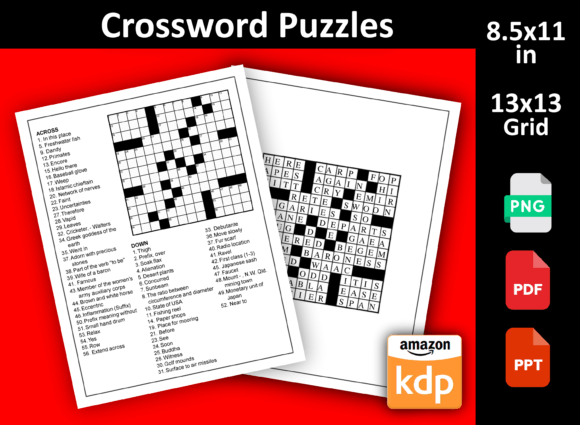
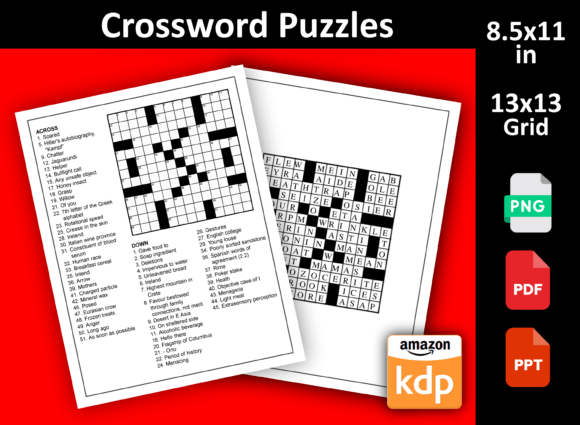
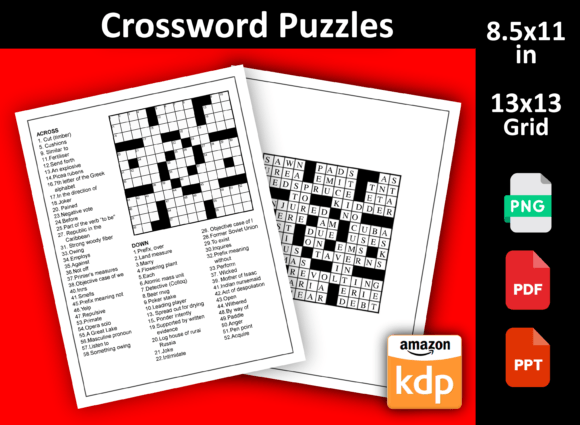
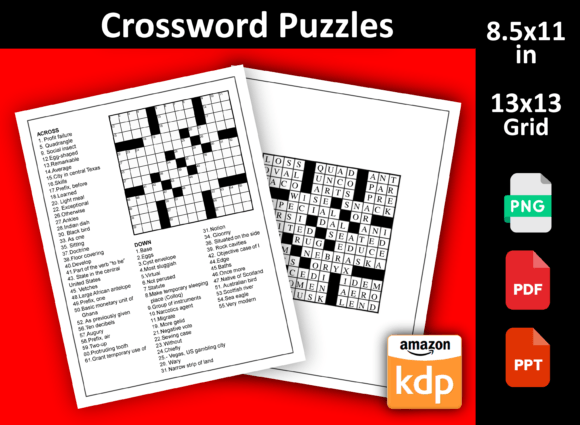
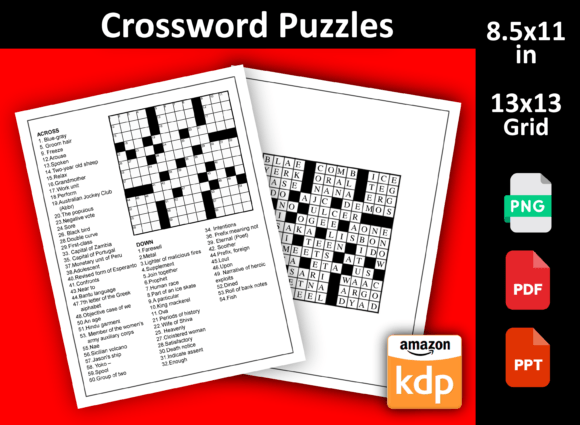
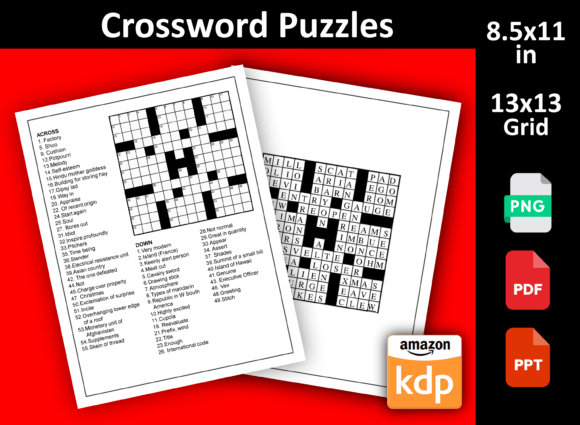
For many indie publishers, creating a puzzle book from scratch means writing clues, building symmetrical grids in specialized software, checking for solvability, formatting pages, and ensuring consistent margins. That sequence can take weeks if you are handling everything alone. Crossword 7 functions as a pre-built interior that cuts that time dramatically. It arrives as a zip file containing PDF, PPTX, and PNG formats, all configured for an 8.5 x 11 inch page with no bleed. This means you can slot it directly into your book assembly process. If you already have a collection of themed crosswords, you can mix and match this volume with others to build a larger, more varied book. The interior uses a 13×13 grid in the American crossword style, set at an intermediate to hard difficulty level. That difficulty range appeals to a broad adult audience, from casual solvers looking for a daily challenge to seasoned enthusiasts who want something harder than a typical newspaper puzzle.
Preparing Your Production Environment for Crossword 7
Before you start dropping content into your manuscript, check that your publishing toolkit is set up to handle the provided files. The PDF is ready for direct use in most publishing software, including Adobe InDesign, Affinity Publisher, or even Kindle Create if you prefer Amazon's native tool. The PPTX file gives you the flexibility to make small adjustments—adding page numbers, headers, or title pages—without needing advanced design skills. The PNG files are useful if you prefer to build your book in a graphics-oriented program like Canva or even PowerPoint. Because the files are designed at the correct trim size with no bleed, you will not need to worry about trimming errors when using Amazon's print-on-demand service. Keep in mind that if you intend to combine multiple puzzle interiors into a mega-book, consistency across page sizes and margins is critical. Crossword 7 uses a standard layout, but you should verify that any other volumes you mix in share the same dimensions to avoid reformatting headaches later.
Working with the 13×13 Grid and American Crossword Style
The choice of a 13×13 grid is deliberate. It offers more solving space than the common mini-grids (9×9 or 11×11) while remaining less intimidating than a massive 21×21 Sunday puzzle. This middle-ground format works well for books intended to be used on a lunch break, during a commute, or in a quiet evening routine. The American style means words intersect frequently with relatively few black squares, creating an interconnected solving experience where each filled answer helps unlock others. Because the puzzles are labeled intermediate to hard, clue writing is an area where you can add your own layer of customization. If you plan to pair this interior with your own clue lists, confirm that the clues match the grid solutions exactly. Crossword 7 includes a solution page for each puzzle, so you have a reference point for accuracy. However, if you modify the grid or clues, you must double-check consistency—solvers will quickly abandon a book with faulty puzzles.
Integrating Crossword 7 with Other Book Assets
A puzzle book rarely sells on puzzles alone. Structure plays a huge role in perceived value. You can build a complete product by combining Crossword 7 with a custom introduction page, a difficulty rating guide, a section for notes, or even a short tutorial on crossword-solving techniques for beginners. The interior files provide the core content; you build the wrapper. For example, use the front matter to explain your puzzle philosophy, share a brief backstory about the crossword theme, or include a simple index. Many successful KDP puzzle books also include a page at the start that shows how the grid numbering works. Even if the puzzle stands alone, such additions create a more professional reading experience and can help with customer reviews. Since the file is no-bleed, you can comfortably add your own elements before or after the puzzle pages without worrying about overlapping the trim edge.
Quality Control and Formatting Checks Before Upload
Publishing a puzzle book with layout mistakes damages credibility quickly. Solvers expect clean grids, clearly readable clue numbers, and correct orientation. When you receive the Crossword 7 zip package, open the PDF and visually scan each page. Confirm that the grid fits entirely within the printable area of an 8.5 by 11-inch sheet. Look for any misaligned numbering or faint lines. Since the file is originally provided as a print-ready interior, these issues are unlikely, but verifying them early saves returns later. Next, if you combine this interior with your own pages—such as a title page, copyright page, or additional puzzles—export your final manuscript as a PDF and run it through Amazon's online previewer. Check that page order is logical, solutions appear in the correct location (typically at the back of the book), and that no pages are rotated or cut off. For those who prefer working with the PPTX, remember that PowerPoint can sometimes shift text boxes when converting to PDF; always export and inspect rather than assuming a perfect translation.
Organizing Multiple Puzzle Volumes for Long-Term Growth
A single puzzle book is a starting point. Many KDP publishers build a series or a brand around puzzle interiors. Because Crossword 7 is designed with a unique layout, you can create several volumes that feel consistent while still distinct. You might label them by difficulty progression, seasonal themes, or simply "Volume 7" as part of an ongoing series. If you already have volumes 1 through 6 published, adding this one expands your catalog without requiring a new design concept. The mix-and-match capability mentioned in the product description is powerful: you can pull one puzzle from this set, three from another, and build an entirely new collection. As long as the grid sizes and formats align, your internal book structure stays tidy. This modular approach reduces the feeling of repetitiveness for buyers and lets you test different difficulty mixes in the marketplace.
Practical Use Cases Beyond the Standard Puzzle Book
While the primary application is a full crossword book, Crossword 7 can also support adjacent products. For instance, you might create a workbook that combines crosswords with reflection prompts, journaling pages, or vocabulary exercises. Because the files are editable in PowerPoint, you can duplicate a puzzle and place it next to a lined page for notes, creating a hybrid activity book. Another use is as a contributor asset: if you manage a team of freelancers who assemble puzzle books, providing them with a pre-tested grid eliminates the need to explain formatting rules repeatedly. You can also use the PNG files for social media teasers: post a snippet of a puzzle to generate interest before launch. With the solution included, you can create a "how well did you do?" section in your book's back matter to increase engagement.
Efficiency Gains Compared to Building Puzzles from Scratch
Creating a symmetrical crossword grid manually is time-consuming. You must block out squares, number the grid correctly, and ensure every word is valid. Most crucially, the grid must follow crossword construction rules, which can trip up beginners. Crossword 7 handles that heavy lifting. By starting with a completed grid, you can focus your creative energy on clue creation, book design, and marketing—activities that more directly influence sales. If you typically spend 15 hours designing a book interior, this asset can cut that down to 2 or 3 hours of assembly, formatting, and review. The intermediate-to-hard difficulty also means you do not need to provide overly simple clues that might bore the solver base. You can craft clues that require some lateral thinking, catering to an audience that enjoys a tougher puzzle.
Ensuring Puzzle Solvability and Solver Satisfaction
A major hidden cost in puzzle self-publishing comes from solvability issues. If a grid has a mistake—two words crossing with mismatched letters—the entire puzzle becomes frustrating or unsolvable. Because Crossword 7 includes the solution, you can reverse-engineer the grid to verify all intersections. This is especially important if you make any adjustments to the grid in the editable formats. Even without changes, take the time to read through the solution grid and make sure you understand each entry. If any word is particularly obscure, you can craft a clue that gives a fair hint. This careful review process ties into E-E-A-T principles: by demonstrating expertise in puzzle construction and a commitment to quality, your book stands out. Amazon customers are quick to flag errors in reviews, so a meticulously checked book protects your rating and long-term earnings.
Financial and Strategic Considerations for KDP Publishers
Paperback puzzle books have a healthy royalty rate on KDP, and printing costs are relatively low because interiors are black-and-white, no-bleed designs—exactly what Crossword 7 provides. By reducing design effort, you lower your effective time investment per book, which improves your margin when you consider the cost of your own labor. If you are launching a crossword book in a competitive niche, such as large-print crosswords or themed puzzle books, the interior quality can be a key differentiator. A clean, evenly weighted grid with consistent line weights looks far more professional than a hastily assembled one. Additionally, because the files come in multiple formats, you can later adapt the same puzzles for other platforms—perhaps an Etsy printable or a bonus digital download for a course. The initial investment in a ready-made interior pays off across multiple channels.
Long-Term Maintenance and Updates
Once your book is live, you might want to release an updated edition or a companion volume. Because you have the source PNG and PPTX files, making small updates becomes trivial. For example, if you discover a clue that received negative feedback, you can adjust it, re-export the interior, and upload a revised version. Keep your original zip file organized with a clear naming convention, especially if you plan to license the puzzles or collaborate with another author. A well-organized asset library lets you respond quickly to market trends or fix issues without starting from scratch. This kind of preparedness is exactly what separates a hobbyist from a serious publisher who treats puzzle creation as a repeatable, scalable process.
Adapting Crossword 7 for Different Niches
While the interior is general in nature, you can easily theme the surrounding book. Consider a book titled "Crossword 7: Travel Edition" where you add travel-themed clip art to the page margins or create clues around geography. Or "Crossword 7 for History Buffs" with historically themed clues. The core grid remains unchanged, so you do not need to revalidate puzzle mechanics. You only need to style the book cover and adjust the clue set. This approach lets you serve multiple niche audiences without creating entirely new grid interiors each time. If you are targeting professionals, you could build a book marketed to busy executives who want a mental warm-up before meetings—the 13×13 grid size is small enough to be completed in a single coffee break. The solution pages give immediate feedback, which suits the productivity mindset of wanting a clear finish line.
Collaboration and Outsourcing Possibilities
If you manage a publishing team, Crossword 7 becomes a standardized asset that contributors can use without lengthy briefings. You can hand the PDF to a formatting specialist and ask them to insert it into a book template you have already approved. You can give the PPTX to a virtual assistant to add page numbers and a simple header. Because the interior is consistent, your quality checks remain predictable. When you expand to multiple volumes, you can rotate between different grid styles while keeping the same layout parameters. This consistency also makes it easier to create a series look that buyers recognize. For instance, all your volumes might share the same header font and footer placement, reinforcing brand identity without requiring a designer for each release.
Technical Compatibility with KDP Print Specifications
Amazon KDP’s paperback printing requirements can be tricky for puzzle interiors. If margins are too narrow or text runs too close to the spine, content may get lost in the binding. The no-bleed, 8.5 x 11-inch format of Crossword 7 keeps content comfortably away from the edges. When you upload, set your trim size to 8.5 by 11 inches and ensure bleed is set to “no bleed” in your KDP setup. The PDF file is likely already sized correctly; however, if you combine pages using PDF editing software, double-check that the final file page size remains consistent. An easy way to do this is to open the PDF properties and verify every page reports the same dimensions. Pay attention to the solution pages as well—if you place them at the end, make sure they do not accidentally become mirrored or upside-down. Such small details help avoid customer complaints and returns.
Putting It All Together: A Sample Workflow
To make this concrete, here is how one might integrate Crossword 7 into a real publishing sprint. Day one: unzip the file and review all puzzles and solutions. Note any words you might want to give particularly interesting clues. Day two: create a new Canva or PowerPoint document with your book’s front matter—title, copyright, a brief note for solvers. Insert the puzzle pages (in order) from the provided PDF or PNG files. Add the solution pages after all puzzles. Day three: design a cover using a tool like Adobe Express or Photoshop, incorporating puzzle-related imagery. Day four: export the full interior as a PDF, run it through Kindle Previewer, and check pagination. Day five: upload to KDP, fill in metadata with keywords like “intermediate crossword puzzle book,” “large print crossword,” and “brain games for adults.” Launch. This timeline is aggressive but possible precisely because the hardest part—grid design—is already done. The interior acts as the stable foundation around which all other decisions revolve.
Balancing Difficulty and Broad Appeal
Intermediate-to-hard puzzles occupy a sweet spot. They filter out buyers who find easy puzzles boring, yet they do not alienate motivated solvers. When you write clues for this set, consider a range of reference points: pop culture, classic literature, science, geography, and daily vocabulary. Avoid clues that rely on highly dated trivia unless your book targets a specific nostalgia niche. The solution grid is your cheat sheet; use it to craft clues that guide the solver toward the answer with a bit of wordplay. A well-clued crossword feels satisfying. Even if you use a pre-made grid, the clue quality is where you inject your voice and expertise. This is also where you can build a loyal following—solvers who appreciate clever, fair clues will look for your subsequent volumes.
Final Thoughts on Crosswords 7 as a Productivity Tool
In the context of a self-publishing business, Crossword 7 is not just a product; it is a production accelerator. It reduces the friction between having a book idea and holding a physical proof copy. By offering a pre-tested, formatted, and versatile interior, it allows you to operate more like a publisher and less like a puzzle constructor who is also learning layout design. Whether you use it as a standalone book, a chapter in a larger compilation, or the basis for a themed series, its value multiplies the more you integrate it into a repeatable publishing process. The combination of PDF, PPTX, and PNG formats ensures that no matter what software you prefer, you can start working immediately. The 13×13 American-style grid, backed by a solution page and set at a satisfying difficulty, aligns with what crossword buyers actually want. For anyone serious about building a catalog on Amazon KDP, assets like this turn a complex, multi-step project into a manageable, predictable routine.