Crossword 24: The Ready-Made KDP Puzzle Interior
Walk into any bookstore or browse Amazon’s bustling puzzle aisle, and you’ll see the same truth repeated: crossword puzzle books have an unshakable fanbase. They appeal to retirees keeping minds sharp, office workers on a lunch break, and young adults craving a screen‑free challenge. For publishers and creative entrepreneurs, this demand translates into a low‑overhead, high‑potential publishing niche on Amazon KDP. The secret isn’t reinventing the grid — it’s delivering a polished, consistent, and instantly usable interior that feels professionally designed. That’s exactly where Crossword 24 steps in as a practical design asset for anyone ready to build a puzzle book brand.
What Makes Crossword 24 a Standout Crossword Interior
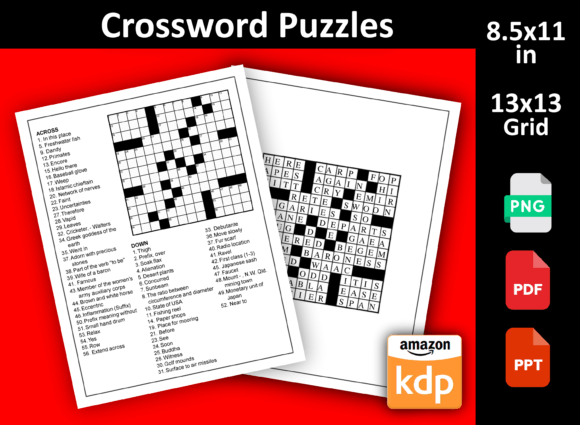
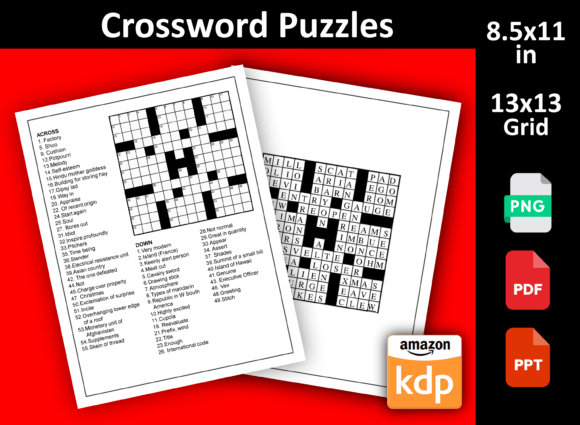
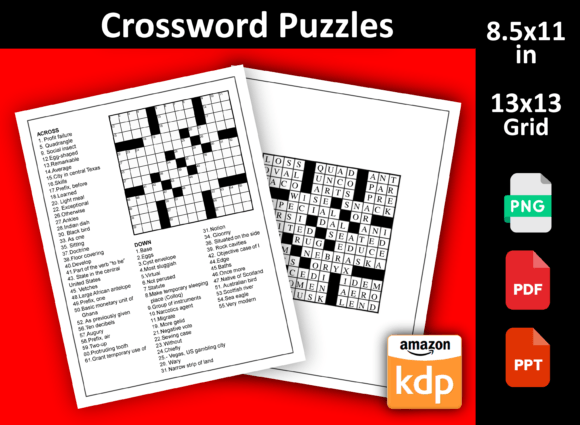
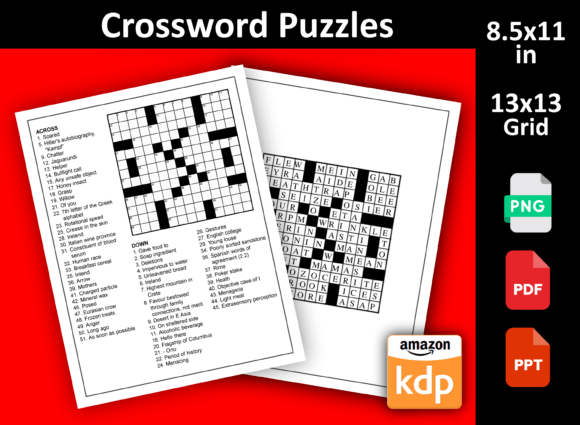
At its core, Crossword 24 is a carefully constructed 13×13 American‑style crossword puzzle interior. It’s delivered as a print‑ready package that includes a full puzzle, a clean solution page, and complete specification for immediate use. The grid is built at an intermediate to hard difficulty level, striking a sweet spot that challenges solvers without alienating casual puzzlers. This balance broadens your audience, attracting the dedicated solver who wants a mental workout while still being approachable enough for a broad market.
Visually, the interior adopts a calm, functional aesthetic that prioritizes clarity. The grid uses a highly legible sans-serif font for clue numbers and letter boxes — a choice that removes any decorative noise and lets solvers focus on the wordplay. Unlike older puzzle books that lean on cramped serif typesetting, the modern typography here creates a crisp, open rhythm across the page. Clue sets are typeset in a matching typeface that respects vertical hierarchy: main clues sit in a clear, medium‑weight style, while solution text maintains a slightly finer weight so answers don’t dominate the page. The no‑bleed 8.5×11 format guarantees that every puzzle prints safely on standard home printers, removing costly trim adjustments.
What you really get is a design asset that takes the guesswork out of layout. The included zip file holds three formats — PDF for direct upload, PPTX for quick customization, and PNG for previews or promotional graphics. Because the puzzle itself isn’t an editable template where you’d need to rebuild grid logic, you’re purchasing a finished interior that you can insert as‑is into your book. That means you can focus your energy on branding, cover design, and marketing rather than wrestling with cell alignment or numbering mistakes.
Building a Puzzle Brand That Buyers Recognize
Single puzzle interiors rarely build a business. The power of Crossword 24 amplifies when you treat it as a modular unit. Pair it with another volume of crosswords, word games, or logic puzzles to create a series. When each book in your lineup shares the same grid structure, font choices, and clue‑presentation style, you create what brand strategists call brand identity — a visual thread that tells customers your product is consistent, trustworthy, and easy to use.
Consider this: a shopper scrolling Amazon encounters a crossword book with a chaotic interior — misaligned clue columns, jarring font sizes, unpredictable grid spacing. They click away. Your books, built consistently around Crossword 24’s tidy design, avoid that fate. The clean sans‑serif typeface used for the grid becomes a signature. Over time, buyers start to associate that effortless readability with your author name. This is the same principle that works for editorial design in magazines: readers return when they know exactly how text and visuals will behave.
Cover creation is where font pairing becomes your expansion tool. The interior’s neutral, contemporary sans‑serif forms a superb backdrop for a bolder display font on the front cover. For instance, if you’re designing a crossword book for a casual audience, pairing the interior’s clarity with a friendly handwritten font on the cover can signal approachability. For a premium, large‑print series, you might choose a sturdy serif font that echoes the elegance of classic newspaper crosswords. In both cases, the interior doesn’t compete with the cover — it simply does its job of delivering a comfortable solving experience. The result is a cohesive package that feels deliberate rather than thrown together.
Actionable Steps to Your First KDP Crossword Book
Leaning on a ready‑made interior doesn’t mean skipping the creative process. Instead, it rearranges your workload so you pour effort into the parts that sell books. Start by grabbing the Crossword 24 zip and opening the PDF. Inspect how the grid breathes — ample margin space, balanced clue density, no ink‑heavy fills that chew through customer printers. That immediate satisfaction confirms the interior’s print quality.
Next, decide on your book structure. You can drop this single puzzle into a themed compilation, or you can duplicate the PDF pages to build a 100‑page puzzle book in minutes. If you want to tweak the design — maybe add a “Good luck!” header or a small logo — the PPTX format lets you work inside PowerPoint or Google Slides. You won’t need to touch the crosswords themselves; just layer your branding on surrounding pages. When you’re ready, export your final book PDF and upload to KDP. Because the puzzle uses standard commercial font embedding in the PDF, you won’t face font licensing panic at the print stage — the type stays sharp and intact.
Don’t overlook the PNG file. Use it to create social media graphics that tease a few clues or show off the crisp grid. Pair the puzzle preview with a script font overlay for a cozy, puzzle‑morning vibe, or keep it minimal with a no‑nonsense layout that lets the grid speak. Small decisions like these tie your entire product presentation together, from Amazon listing images to Instagram stories.
Font, Readability, and the Psychology of a Good Solve
Puzzle solvers spend 30 to 60 minutes staring at a grid. If the typography strains their eyes, the book gets abandoned. Crossword 24 sidesteps this with a deliberate visual hierarchy: clue numbers appear slightly larger and bolder than answer boxes, guiding the eye naturally from question to cell. The absence of ornate serifs in the grid eliminates letter crowding, a common frustration in older puzzle layouts. This isn’t just design aesthetics — it’s a functional choice that reduces cognitive friction and keeps solvers in a flow state.
When you compare this to a puzzle book that mixes a quirky script font for clues with a thin, low‑contrast grid, the difference in usability is night and day. Crossword 24 proves that a restrained, purpose‑driven typeface communicates competence. For your personal brand, that means customers are more likely to trust your future books. They’ll assume — correctly — that you invested in design quality, whether you’re publishing a single volume or a sprawling puzzle empire.
Font pairing also applies to supplements you might add. If you decide to include an answer key page with stylized headings, stick to a complementary creative font that doesn’t disrupt the solving flow. A light slab serif, for example, can sit above the solution list and feel like a natural extension of the interior’s clean logic. Small touches like this, applied across multiple volumes, turn a basic crossword book into a recognizable product line that readers buy on repeat.
Who Finds the Most Value in Crossword 24
The interior wasn’t built just for professional publishers. Content creators who want a lead magnet for email lists will find it just as useful. A blogger writing about brain health can package this single puzzle into a free printable, embedding their brand watermark using the PPTX flexibility. Crafters selling puzzle bundles on Etsy can mix Crossword 24 with other activity pages to round out a dementia‑focused cognitive workbook. Marketers running a themed campaign — think travel crosswords for a tourism board — can co‑brand the puzzle with minimal design effort. In every scenario, the puzzle acts as a frictionless design asset that elevates the final product without requiring its own puzzle‑building skills.
Licensing Clarity and File Flexibility
One anxiety point for many KDP publishers is font licensing. With Crossword 24, the PDF format embeds all text directly, so you never need to track down a separate license for the puzzle’s typeface. The fonts are baked in and print faithfully. If you do customize clue text in the PPTX and choose a new typeface for some headings, apply the same rigor you’d use in any logo design project: verify the font’s commercial license permits use in print‑on‑demand products. Most reputable font houses clearly state KDP‑friendly terms, so stick with known sources for any added titles or accents.
The PNG adds a layer for web design promotions. Upload the puzzle image to your blog or sales page, and the clarity stays high whether viewed on a phone or desktop. For social media graphics, that same PNG can be paired with a warm handwritten font overlay to promote a “Crossword Saturday” series. The core design never changes; you simply build outward with assets you control.
A Long‑Term View for Your Puzzle Book Portfolio
Trends in publishing shift, but crossword puzzles remain a steady force. What sets successful KDP publishers apart is the ability to deliver a consistent, comfortable experience that solvers want to return to. Crossword 24 gives you that starting foundation: a clean 13×13 American grid with enough difficulty to engage, formatted in a contemporary sans‑serif font that prizes readability above all else. Whether you publish a single themed puzzle or a multi‑volume brand, the interior handles the heavy lifting of layout, so your personality shines through in packaging, marketing, and customer relationships. That split — a reliable, professional core paired with your own creative direction — is exactly how small publishers stand shoulder‑to‑shoulder with established names in the puzzle aisle.