The Enduring Appeal of Purpose-Built Boat Log Book Templates
Seasoned sailors and weekend anglers share a quiet truth: a boat is not just a vessel. It’s a floating archive of trips, tides, maintenance milestones, and weather patterns. Yet for too long, the log book that should hold all that knowledge has been an afterthought—a generic spiral notebook stuffed into a dry bag, pages curling and ink bleeding through. The growing availability of professionally designed boat log book templates is changing that. More than just formatted pages, these ready-to-use interiors combine function with a thoughtful structure that speaks to modern habits on the water and inside the self-publishing world.
Why a Structured Log Book Still Matters on the Water
Digital navigation apps and engine sensors now capture enormous amounts of data automatically. But those streams rarely tell a complete story. A dedicated log fills the gap, giving skippers a place to record impressions that machines miss: the shift in wind direction, a sudden drop in barometric pressure, a fuel stop at an unfamiliar marina, or the exact hour the starboard bilge pump started cycling more frequently than usual.
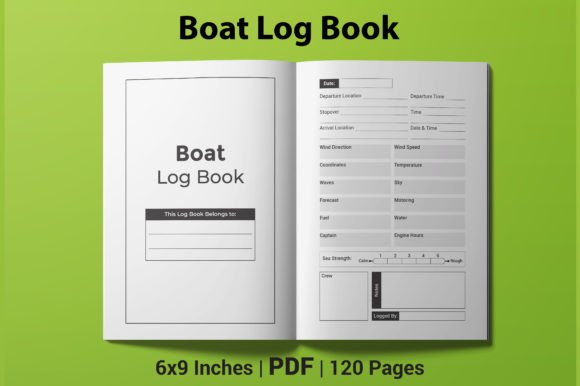
Many boaters recognize the value of systematic documentation but rarely stick with it because the tools feel wrong. A blank page can be intimidating. It wastes mental energy on layout rather than on observation. A well-constructed boat log book interior removes that friction. It anticipates what needs recording—date and time, engine hours, fuel and water levels, weather conditions, passage notes, and a maintenance checklist—so the person at the helm stays focused on the experience, not on formatting.
From Blank Pages to Intelligent Design
Walk into any chandlery and you’ll still find traditional hardbound logs with dense columnar layouts that look unchanged since the 1970s. Many are expensive, limited in page count, and inflexible. Meanwhile, the self-publishing economy has created a new pathway. Creators and boating enthusiasts are now turning to print-on-demand platforms like Amazon KDP to publish niche journals that reflect how people actually use their boats today.
That shift matters because it decouples design from mass-production constraints. Instead of a one-size-fits-all approach, buyers can download a boat log book template tailored precisely to small powerboats, sailboats, or even fishing skiffs. The file arrives as a 100% ready PDF, uploaded directly to KDP, and the result is a physical book printed on demand. No inventory, no upfront minimums, and a modern interior that can be refined based on real feedback.
This evolution is part of a broader movement. Low-content book interiors—log books, journals, planners—are being created with the same attention to usability that software designers apply to interfaces. Spacing, font selection, section hierarchy, and paper-friendly contrast all come into play. A boat log book interior designed with these principles doesn’t just look cleaner; it actively encourages consistent use.
What a Complete Boat Log Book Interior Actually Contains
For anyone considering publishing their own version on Amazon, or for a boater looking to pick up a smarter log, the specifics of the template matter far more than a generic description. The best options on the market combine volume flexibility with print-ready precision.
A typical well-engineered template package includes:
- Page count options: 100, 110, or 120 pages, letting you choose between a slim quarter-log and a heftier annual record. This variety matters because a liveaboard cruiser’s logging rhythm differs from a day sailor’s.
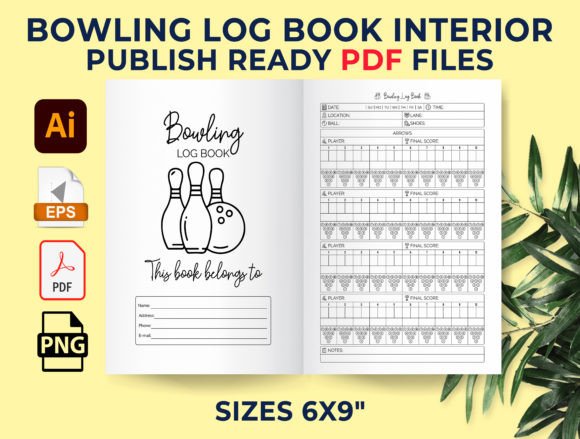
- Trim size: 6×9 inches. That dimension sits comfortably in a chart table cubby or a gear bag without wasting space, and it’s a popular KDP format that keeps printing costs predictable.
- No bleed design: All content sits within safe margins, so no part of a weather column or a notes line gets trimmed off during production. This is a critical but often overlooked detail that prevents amateur-looking edges.
- File formats: Beyond the mandatory KDP-ready PDF, the source files often include AI, EPS, and high-resolution JPG versions. Those extras give you the freedom to tweak a header, add a boat name placeholder, or adjust line weights before uploading.
- Print-ready interiors: The pages are formatted with precise margins, consistent line spacing, and high-resolution vector or raster elements that reproduce sharply without blurring or pixelation.
The ready PDF file is arguably the most valuable asset. It means a publisher can go from download to live listing in minutes—no reflowing text, no angry error messages from KDP’s automated reviewer. The interior is pre-checked for bleed settings and margin compliance, two of the most common stumbling blocks for newcomers.
How Self-Publishers and Hobbyists Are Using These Templates
It’s easy to assume that only graphic designers benefit from downloadable interiors. The reality is more interesting. Marine surveyors, sailing instructors, charter boat operators, and fishing guides are among those quietly publishing their own branded log books. A dive boat captain in the Florida Keys can pair a custom cover with the template’s interior and offer a log tailored to local reef names and GPS coordinates. A sailing school in the Pacific Northwest might add a couple of interior pages with safety checklists, then upload the whole package in an afternoon.
For these users, the boat log book interior functions as a foundation, not a finished product. The provided AI and EPS files let them make small adjustments without rebuilding the entire layout. Some add a page for vessel specifications; others insert a laminated-looking reference table on the inside cover (though that last step requires a separate design). The point is flexibility without friction.
Even for the boater who never intends to publish, having a digital source file can be convenient. Print a single copy at home for a season, bind it securely, and treat it as a disposable record. If it gets soaked, printable masters are already backed up in the cloud. That’s a level of resilience a store-bought log can’t match.
Design Choices That Support Real Usage Patterns
Log books live in harsh environments. Sunlight, salt spray, and damp hands are constants. While the template itself can’t control the paper or cover material one chooses through KDP, it can influence how the interior holds up visually. A no-bleed, high-resolution interior with clean greyscale or black-only elements prevents ink bloom on standard cream or white paper. Subtle section dividers and light rule lines keep pages scannable without overwhelming the text a boater writes by hand.
Effective templates also balance openness with guidance. A page that pre-fills every possible data point starts to feel like bureaucratic paperwork. The better designs leave generous “Notes” or “Remarks” blocks, acknowledging that a captain might want to jot down a story—the family of dolphins that followed for an hour, the anchorage where the holding ground was surprisingly poor. That mix of structure and breathing room is what makes a boat log book template feel like a partner instead of a chore.
Observations from Amazon KDP’s marketplace hint at what works. Logs with clearly labeled sections for fuel tracking, engine maintenance triggers, and weather trends tend to receive stronger reviews because they help owners spot patterns early. A repeated note about rising engine temperature at a specific RPM becomes actionable when it’s easy to find, not buried in dense prose.
Choosing Between Page Counts and What It Signals
The availability of 100, 110, and 120-page versions isn’t just a bundle perk; it addresses distinct publishing strategies. A 100-page log might retail at a lower price point, attractive to casual boaters who’ll fill it over two summers. A 120-page edition feels more substantial, better suited to long-distance cruisers or skippers who prefer logging every day on the water, regardless of trip length.
From a KDP publishing perspective, these page counts also interact with production costs and spine width. A 6×9 inch book with 100 pages has a thinner spine, which means cover designers need to be mindful of text placement near the spine fold. The template’s interior already accounts for that with generous gutter margins, one less thing for the publisher to recalculate. The difference between 100 and 120 pages is modest in thickness but can change how the finished paperback feels in hand—a tactile detail that influences buyer perception, even if they don’t consciously register it.
Moving Beyond the One-Time Download
What makes the model sustainable is how easily a boat log book interior can be updated. A year from now, if users start asking for a dedicated column for lithium battery state-of-charge or a space for marina contact information, the template owner can adjust the source file and release a revised edition. That iterative improvement cycle, common in software, is still rare in print publishing, but KDP’s low-risk environment encourages it.
For the buyer who simply wants a better log book today, the advantage is immediate. Instead of settling for a mass-market product that almost fits, they get a professional interior that can be turned into a physical book by tomorrow afternoon. The cover will need designing—the template is interiors-only—but that separation of duties matches how modern publishing often works: one person handles the insides, another tackles the exterior branding.
This isn’t about replacing the traditional ship’s log with a digital gimmick. It’s about recognizing that a vessel’s history deserves a container that matches the clarity and care someone puts into maintaining the boat itself. When the page format respects the task, the log is more likely to live on a nav table, open and ready, instead of buried under life jackets in a locker.