Track Every Roll with a Bowling Log Book
Most bowlers walk away from a game remembering only the final score. A handful of standout frames might linger, but the details of what worked and what didn't fade within hours. That's where a Bowling Log Book changes the equation. It transforms scattered memories into a structured record you can actually learn from, session after session.
Whether you're bowling in a competitive league, coaching a youth team, or simply trying to break 200 more consistently during open play, keeping a written log gives you something no digital scoreboard ever will: context. You see patterns emerge. You notice which lane conditions throw off your spare shooting. You realize that your third game tends to be stronger than your first, or that certain adjustments lead to measurable improvements over time.
What Makes a Bowling Log Book Worth Using
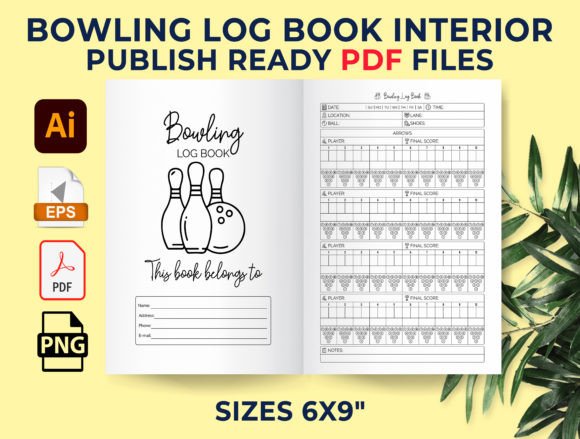
Not all log books are created equal, and the thoughtful design behind a well-constructed one matters. This particular log book measures 6 inches by 9 inches, a size that slips comfortably into a bowling bag without adding bulk. At 120 pages, it provides enough space to track months of regular play without feeling flimsy or cramped.
The interior follows a per-day format, which means each session gets its own dedicated space. You're not squeezing multiple outings onto a single crowded page. This approach respects the fact that every trip to the lanes carries its own set of variables, lane oil patterns, opponents, your physical condition, even the time of day you're bowling. A separate entry per session lets you isolate those factors and study them later.
Beyond the score grids, the layout includes room for simple tracking and note-taking. You can jot down ball changes, foot adjustments, observations about lane conditions, or mental notes about your release. That space for notes might seem small, but it's where the real growth happens. Scores alone tell you what happened, notes tell you why.
Why Written Tracking Beats Relying on Memory
The human memory is surprisingly unreliable when it comes to performance data. You might remember the strike you threw in the tenth frame to win a close match, but do you remember the three single-pin spares you missed earlier that same game? Probably not with the same clarity. A Bowling Log Book doesn't play favorites with your memory. It records the struggles right alongside the triumphs, and that honest accounting is what drives improvement.
Professional bowlers and serious amateurs have used paper logs for decades. Even in an age of smartphone apps and automatic scoring systems, there's a tactile benefit to writing things down by hand. The act of recording forces you to reflect on each frame more deliberately than swiping through a screen ever could. You engage with the information differently when you put pen to paper.
Catching Subtle Patterns Before They Become Bad Habits
Let's say you've been leaving the ten pin more frequently than usual. Without a log, you might chalk it up to bad luck or an off night. With consistent tracking across ten or fifteen sessions, you might notice the ten pin leaves happen predominantly when you're bowling on fresh oil, or when you've been throwing a particular ball. That kind of insight doesn't announce itself in the moment. It only surfaces when you have enough data points collected over time.
The simple tracking system built into this log book makes those patterns accessible even if you're not a stats enthusiast. You don't need to run spreadsheets or calculate complex averages. Just fill in the frames, add your notes, and flip back through the pages every few weeks. Your own handwriting will show you what needs work.
Who Benefits Most from Keeping a Bowling Log
The obvious answer is league bowlers who compete weekly and want to maintain or raise their averages. But the usefulness extends well beyond that group.
Coaches and instructors can use a log book to track student progress across lessons. When a bowler comes in for a session, the coach can reference previous entries, see what was covered, and build on it rather than starting from scratch each time. The log becomes a collaborative tool between coach and athlete.
Youth bowlers benefit from seeing their improvement in black and white. Kids respond to visible progress, and there's something genuinely motivating about looking back at scores from three months ago and realizing how far they've come. Parents can use the log to reinforce practice habits without nagging, the book itself becomes the accountability partner.
Casual bowlers who only hit the lanes once or twice a month might think a log book isn't for them, but that's precisely when it's most valuable. Infrequent play means you have less opportunity to build muscle memory and consistency. A log helps you pick up where you left off rather than starting cold every time.
Bowling Log Book as a Training Companion
Beyond scorekeeping, the note sections let you document practice goals. Maybe you're dedicating an entire session to corner pins. Write that down beforehand, then record your conversion rate. Next time you practice, you'll know exactly where you stood and whether you've improved. This shifts practice from mindless repetition to purposeful, measurable work.
Features That Support Long-Term Use
A few design choices in this particular log book stand out for anyone planning to use it consistently. The 6 by 9 inch format hits a practical sweet spot. It's large enough to write in comfortably without requiring a tiny scrawl, yet compact enough to toss in a bag without it getting in the way. The 120-page count means you're not replacing the book every few weeks, it has the capacity to serve as a full season's companion or even longer depending on your bowling frequency.
The print-ready design operates at 300 DPI, which translates to crisp, clear pages whether you're printing at home or through a professional service. There's no bleed to contend with, so the layout stays clean from edge to edge. An intro page provides just enough structure to orient you without overwhelming you with unnecessary instructions. The unique design keeps things visually appealing without being distracting, which matters when you're glancing at the book between frames.
For those publishing through Kindle Direct Publishing or similar platforms, the files come in multiple formats including PDF, AI, EPS, and PNG. The KDP-tested status means the technical side is handled, no formatting errors, no alignment issues, just a solid product that prints predictably every time.
Practical Ways to Use Your Bowling Log Book
Getting the most out of a log book comes down to consistency and a few simple habits. Here are some approaches that work across different bowling contexts.
- Pre-game entry: Before you throw your first ball, note the date, the bowling center, which lane you're on, and any relevant conditions. Was the oil fresh? Were you using a house ball or your own equipment? This takes thirty seconds and sets the stage for everything that follows.
- Frame-by-frame honesty: Record every frame as it happens, not from memory at the end. Memory smooths over the rough edges. Real-time recording captures the actual sequence.
- Post-session reflection: After the final frame, take two minutes to write a short summary. What felt good? What felt off? Any equipment changes you want to remember? This is the information that turns raw scores into actionable insight.
- Periodic review: Every ten sessions or so, flip back through the pages. Look for trends. Are your open frames clustering around certain spare types? Is your strike percentage improving on one lane condition but not another?
Tracking More Than Just Numbers
Scores are the backbone, but a Bowling Log Book can capture qualitative data too. How was your energy level? Were you rushing your approach? Did you feel confident or anxious in pressure situations? These subjective notes often reveal more than the numbers alone. A low score on a night when you felt great physically points to a different problem than a low score when you were exhausted after a long workday.
What to Look for When Choosing a Log Book
If you're evaluating options, consider how you'll actually use the book week to week. Size matters more than most people realize. A full-sized notebook might offer more writing space, but if it doesn't fit in your bowling bag, you'll leave it at home. The 6 by 9 inch dimensions of this log book strike a balance that encourages regular use.
Page count is another practical consideration. Too few pages and you're constantly replacing the book, breaking the continuity of your records. Too many and the book becomes unwieldy. 120 pages provides a healthy middle ground for most bowlers over a season or two.
Print quality affects legibility and durability. At 300 DPI with no bleed, the pages come out sharp and stay readable even after being handled repeatedly in a lane environment where hands aren't always clean and bags get jostled around. A high-resolution print holds up better to real-world use.
The Note-Taking Factor
Don't underestimate the value of dedicated note space. A log book that only provides score grids gives you half the picture. The notes are where you connect cause and effect. They're what separate a simple tally sheet from a genuine improvement tool. Look for layouts that give notes room to breathe without crowding the scorekeeping function.
Making the Habit Stick
Like any tracking system, a bowling log only works if you use it. The first few entries might feel awkward or time-consuming, but the process speeds up quickly once it becomes routine. Most bowlers find that after two or three weeks, filling out the log feels as natural as putting on their bowling shoes.
One effective trick is to keep the log book visible in your bag right next to your shoes or ball. When you gear up, you see it. When you finish, it's right there waiting. This simple visibility cue dramatically increases the odds of consistent use compared to burying the book at the bottom of a bag compartment.
Another approach is to make the log part of your post-game ritual. Whether you grab a drink at the alley's bar or sit in the car before driving home, spend those few minutes filling out the book. Tying the new habit to an existing routine makes it stick faster.
Over time, the Bowling Log Book becomes more than a record. It becomes a mirror reflecting your progress, a coach pointing out what needs attention, and a source of genuine encouragement when you see those scores steadily climbing. Every bowler wants to improve. A log book doesn't guarantee it, but it gives you the information you need to make improvement possible, and that's a tool worth keeping close.