French Weekly Planner 2024 KDP Cactus
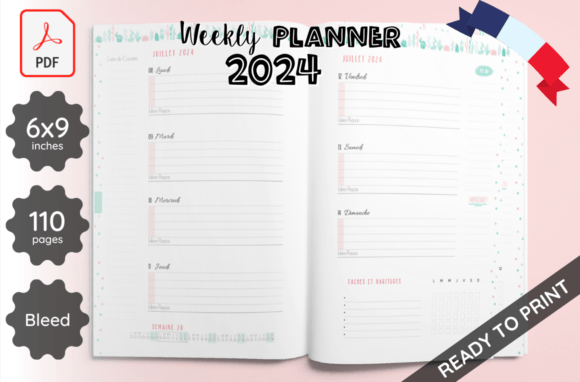
A ready-to-use interior can change the entire rhythm of your publishing workflow. The French Weekly Planner 2024 KDP Cactus gives you exactly that: a fully designed, print-tested weekly planner layout wrapped in a playful cactus motif. It is a living template built for busy creators who want to skip the formatting guesswork and move straight to listing. With 110 pages arranged in left-right weekly spreads, visible month markers along the page edge, and a soft colored design that stays readable, this interior helps you build a planner that feels personal, organized, and instantly usable.
Why an Interior Like This Transforms Your Creative Workflow
Many KDP sellers and stationery designers underestimate how much friction sits inside the formatting process. Aligning margins, managing bleed, keeping month indicators consistent across a multi-page document — these details devour time. The French Weekly Planner 2024 KDP Cactus interior removes that friction because it arrives as a high-quality PDF, already structured for 6 x 9 inch trim size and already tested through Amazon’s quality checks. You receive both a bleed and a no-bleed version, so you can match your cover setup without reworking the file.
Instead of wrestling with InDesign or PowerPoint, you open a file that works. The left and right pages mirror each other intuitively, with days placed in a clean layout that leaves breathing room for notes, priorities, and habit tracking. The month markers — small tabs that appear on the outer edge of each page — act like a navigation system. When printed, they let a user flip directly to March or September without scanning tiny dates. This kind of thoughtful structuring is what makes an interior genuinely useful, not just pretty.
Blending Cactus Charm with Practical Weekly Planning
The cactus theme is more than decoration. It gives the planner a clear visual identity that connects with a specific audience: plant lovers, desert aesthetic fans, stationery collectors who favour cheerful but uncluttered design. Yet the artwork never overpowers the writing space. The colored design stays on the margins and headers, keeping the main note areas airy and distraction-free. This balance is critical because weekly planners live or die by how easily a user can scan their commitments.
When you present a product built from this interior, you are not selling a generic calendar. You are offering a light, warm object that someone wants to keep on their desk. The subtle green and earth tones pair well with Kraft paper covers or minimalist text-based cover designs, giving you flexibility when creating your final product listing. Even small touches, such as the consistent alignment of the dates on facing pages, contribute to a calm user experience — one that encourages consistent weekly planning.
The French Weekly Layout as a Distinctive Selling Point
What sets a French weekly planner apart is often the structuring of the grid and the cultural cues embedded in the language or format. In this interior, the day labels and overall organization reflect a European weekly arrangement that can appeal to bilingual buyers, expat communities, or anyone who associates French style with simplicity and elegance. You do not need to be fluent to appreciate the layout; the visual order itself is the draw.
For publishers, this creates a niche opportunity. The search landscape for “French weekly planner 2024” is narrower and less saturated than plain “2024 weekly planner,” which means a well-presented product can gain visibility faster. Combine that with the cactus motif, and you have a hybrid niche: part linguistics, part botanical design, part functional stationery. It is a reminder that low-content interiors gain traction when they merge two or three small interests into one cohesive product.
Amazon-Tested Quality That Supports Long-Term Seller Confidence
Running a KDP business means dealing with returns and negative reviews if interior files cause print errors. The fact that this interior is labeled Amazon Quality Check Tested reduces that risk significantly. The files meet the technical expectations for bleed, margin safety, and page count common on the platform. When a customer receives a planner that opens flat, has no cut-off text, and shows colors that print crisply, your seller reputation grows.
This reliability matters even more if you plan to use the interior as a base for multiple adaptations — maybe a hardcover version with a premium price point or a coil-bound print option through a different service. Because the PDF is high resolution, you can adjust it for different print specifications without losing clarity. The 110-page count also aligns well with lightweight shipping expectations, keeping costs manageable while still feeling substantial in hand.
Practical Ways to Customize and Personalize Your Planner Product
An interior is a starting point, not a finished monument. The smartest way to use the French Weekly Planner 2024 KDP Cactus is to treat it as a canvas that you layer with your own creative direction. Here are a few approaches that resonate well with real buyer segments:
- Add a themed cover design. Pair the interior with a cover that echoes the cactus palette — soft sage green, terracotta, or hand-drawn succulent illustrations. Keep the title prominent and mention “French weekly layout” in the subtitle.
- Create a matching digital download version. The same PDF can be sold as a printable on Etsy or Gumroad, formatted for A4 or letter paper. Include instructions on how to print double-sided and bind at home.
- Insert a short introductory page. Write a brief welcome message in both English and French, explaining how the planner helps users organize their weeks with intention. This tiny personal touch makes the product feel more crafted.
- Pair with a companion product. A daily gratitude journal, a habit tracker, or a meal planner using the same cactus and color theme extends your line and increases per-customer spend without starting from scratch.
Customization also lives in your listing language. Use descriptive bullet points that mention the visible month markers, the crisp left-to-right flow, and the uncoated-style interior paper (even if it is a print-on-demand standard). Translate the most searched phrases naturally into your keyword plan, and you widen your reach without stuffing.
Who Benefits Most from This Interior — and Why
Beginner KDP publishers will appreciate that the interior removes nearly all structural work. You can upload the no-bleed version, attach a cover, and publish in under an hour. Experienced creators can use it as a foundation for deeper projects: designing guided weekly prompts, adding budget tracking sections, or integrating a tear-off shopping list pad at the back.
Designers who run their own stationery brands can use the file as a reference for future interiors. Seeing how the month markers are placed and how the grid respects the gutter margin teaches best practices for readability along the binding edge. Freelancers helping clients enter the Amazon market can rely on the tested file to deliver consistent results without unpredictable troubleshooting rounds.
Educators and coaches who sell organizational tools to their audiences might adapt the planner as a physical complement to an online course. A time-management workshop, for instance, could include this planner as a workbook, branded with the coach’s logo on the cover. Because the interior is clean and not heavily branded, it leaves room for that kind of professional adaptation.
Layout Subtleties That Influence the End User Experience
Too many low-content planners treat the weekly spread as seven identical boxes on a page. The French Weekly Planner 2024 KDP Cactus takes a more considered approach. The right and left pages are not identical mirrors; instead, they flow as a continuous canvas, which helps the eye move naturally across the spread. The header area typically holds the week number or month label, while the footer contains enough space for a weekly focus or a small habit tracker — a detail that adds perceived value for the user.
The visible month markers along the side function like a thumb index when the book is closed. This feature alone can be the deciding factor for a customer comparing two similar planners. People crave tactile, intuitive navigation; they want to locate November without squinting. In physical products, small engineering wins like this translate into higher satisfaction and repeat purchases.
Keeping Your Planner Projects Organized and Original
When you produce multiple interiors across different niches, it is easy to lose coherence. Stick to a system. Name your source files clearly, note which version has bleed, and keep a separate folder for each niche-combination you develop. If you later decide to create a Spanish cactus planner or a minimalist French annual edition, you can trace back your design decisions and maintain quality.
Originality also comes from the way you package the final offer. Rather than listing the planner alone, consider bundling it digitally: a set of matching cactus stickers for GoodNotes, or a short PDF guide on simple French phrases for daily mindfulness. These extras cost little to produce but position your listing as a value-driven purchase instead of a bare interior copy.
Marketing It Naturally to the Right Buyers
Talk about the planner the way a user would describe it to a friend. Mention how the cactus theme makes Monday feel a little softer, how the month tabs save time during busy days, and how the French structure brings a fresh rhythm to weekly planning. This language resonates on social platforms and in Amazon A+ Content.
Use flatlay photography or mockups that show the interior pages open, highlighting the colored cactus headers and the visible month markers. Short video snippets showing the page flip can drive conversions because they demonstrate the physical quality buyers cannot touch online. Mention the bleed option in your listing’s technical details to reassure those looking for full-bleed printing compatibility.
The French Weekly Planner 2024 KDP Cactus succeeds not because it tries to do everything, but because it does one thing thoughtfully: it provides a structured, friendly, and visually distinctive weekly planning system that you can mold into your own product line. Whether you publish a single planner or build a seasonal collection, the interior stays flexible, tested, and ready — waiting for you to connect it with the people who need a better weekly rhythm.