Crossword 37: Design-Driven Puzzle Interiors
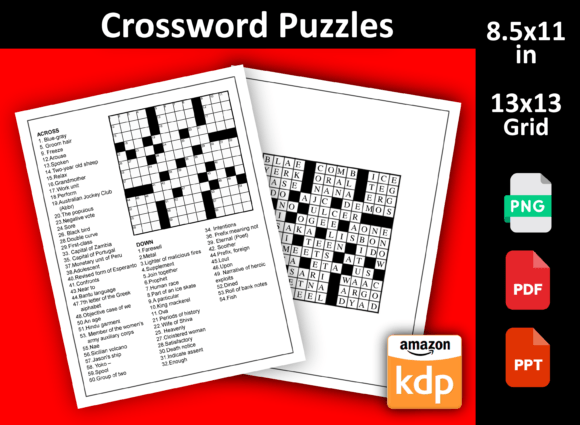
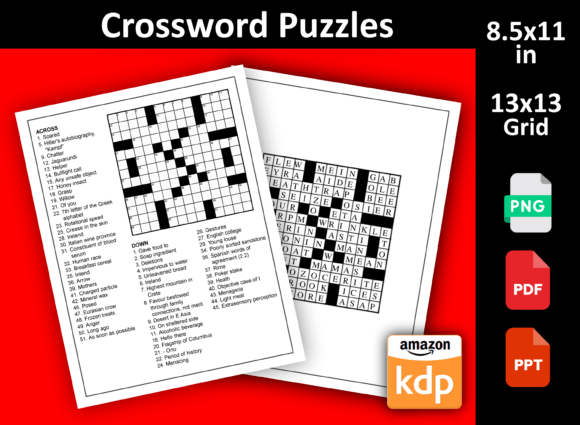
There is something deeply satisfying about a well-crafted puzzle grid. The clean symmetry of black and white squares, the crisp numbering, the balanced spacing — all of it speaks a quiet visual language that serious puzzle enthusiasts recognize instantly. Crossword 37 captures exactly that feeling, offering a thoughtfully designed 13×13 American-style crossword interior that merges the precision of graphic design with the timeless appeal of word puzzles. Whether you are building a new activity book for Amazon KDP or expanding an existing series, the visual quality of your interior pages can make or break a buyer's first impression.
Why Visual Design Matters in Puzzle Books
Most creators treat puzzle interiors as an afterthought, grabbing the first grid generator they find and pasting it into a document. That approach ignores everything we know about visual hierarchy, readability, and user experience. A crossword puzzle is not merely a list of clues and boxes — it is a layout challenge. The reader's eye needs to move effortlessly between the grid, the clue lists, and any supplementary information. When the typography is inconsistent, the grid lines are uneven, or the spacing feels cramped, the solving experience degrades. Crossword 37 addresses these pain points by delivering a polished, production-ready interior where every element has been calibrated for both print and screen presentation.
What Makes Crossword 37 a Strong Design Asset
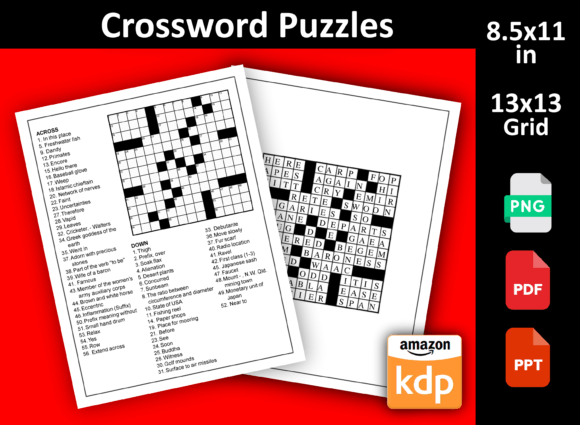
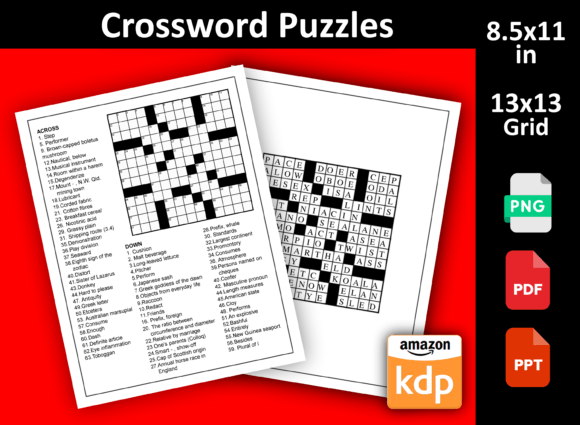
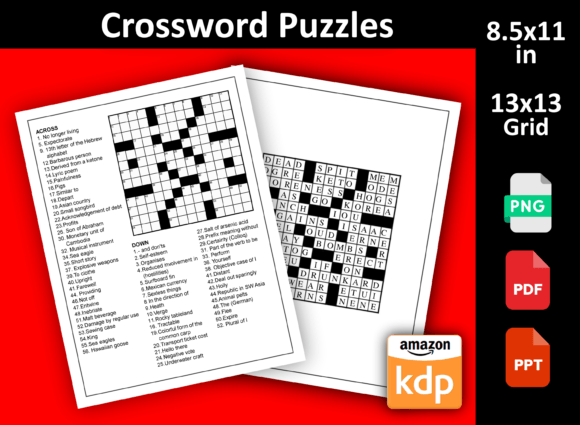
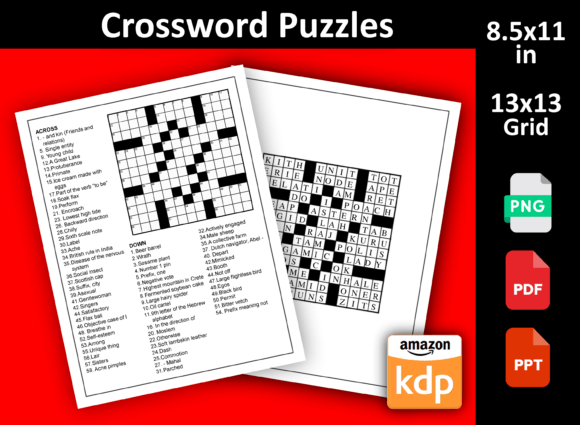
At its core, Crossword 37 is a puzzle interior built around a 13×13 grid — a format that hits the sweet spot between accessibility and challenge. From a graphic design standpoint, the 13×13 structure creates a more balanced page composition than the sprawling 15×15 or 21×21 newspaper grids. It leaves proportional margins, accommodates clue lists comfortably on an 8.5 x 11 inch canvas, and scales beautifully without distorting the visual design of individual cells. The no-bleed specification is a deliberate choice that simplifies the printing workflow, ensuring that no critical puzzle elements disappear into the trim zone.
Grid Architecture and Spatial Rhythm
Every crossword grid has a rhythm — a visual cadence created by the alternating pattern of black squares and letter cells. In Crossword 37, the symmetrical arrangement follows American crossword conventions, which means the pattern looks identical when rotated 180 degrees. Symmetry is not just a puzzle rule; it is a design principle that creates instinctive visual balance. When a solver opens the page, the grid feels stable and intentional, reinforcing trust before the first clue is even read.
Typography Choices That Support Usability
The numbering system inside Crossword 37 uses a clear, unobtrusive typeface that sits neatly in the corner of each cell without crowding the letter space. This is a subtle but crucial detail. Overly bold or large numbers compete with the solver's handwritten or typed answers. Undersized numbers strain the eyes. The interior achieves that middle ground where the typography serves as a quiet guide rather than a visual distraction. For designers assembling puzzle books, this means less time adjusting font properties and more confidence that the asset will reproduce consistently across print-on-demand platforms.
Practical Applications Across Creative Projects
While Crossword 37 is packaged as a ready-to-use puzzle interior, its design quality opens up broader creative projects and commercial applications:
- Activity book series: Combine multiple volumes with different grid sizes and difficulty levels to create a progressive puzzle collection that maintains visual consistency throughout.
- Branded promotional materials: Businesses in the education, travel, or entertainment sectors can customize puzzle books as branding tools, inserting their logo and color palette alongside professionally designed grids.
- Digital products: The included PNG files allow designers to extract individual grids for use in social media graphics, newsletter headers, or interactive web content.
- Editorial design: Magazines and journals looking to add a puzzle section can drop the pre-formatted grid into their editorial design layout with minimal modification.
- Merchandise and stationery: The clean grid aesthetic translates well to notebooks, coasters, and other physical products where puzzle motifs serve as decorative elements.
Consistency and Scalability in Print Design
One of the most frustrating experiences in print design is discovering that an interior file does not scale correctly or that a PDF export introduces artifacts. Crossword 37 ships as a zip file containing PDF, PPTX, and PNG formats, giving designers flexibility across different software environments. The PDF preserves vector sharpness for professional printing. The PPTX file allows direct editing for those who work primarily in presentation tools. The PNG provides a raster fallback for digital marketing previews and online store listings. This multi-format approach reflects a practical understanding of how modern design workflow actually functions — no single file type fits every need.
Level Design and Audience Engagement
The intermediate-to-hard difficulty range baked into Crossword 37 signals a clear understanding of the puzzle market. Beginners often churn quickly, but intermediate and advanced solvers return repeatedly, buy sequels, and leave positive reviews. From a user experience perspective, the challenge level directly impacts engagement metrics. Puzzles that are too easy feel disposable; puzzles that are impossibly hard feel exclusionary. Crossword 37 targets the dedicated solver who appreciates a genuine mental workout, and the clean visual hierarchy of the page ensures that the challenge comes from the clues — not from deciphering a cluttered layout.
Building a Cohesive Brand Identity on Amazon KDP
Puzzle book creators on KDP often underestimate the role of brand identity. A single crossword interior, no matter how well designed, is only one piece of a larger publishing strategy. Savvy creators use consistent interior styling across multiple volumes to establish a recognizable look. When a customer recognizes the grid style, the clue formatting, and the overall modern aesthetics, they associate that visual signature with a quality solving experience. Crossword 37 can function as either a standalone product or a template that unifies a multi-volume puzzle brand. Pair it with a matching cover design, a defined color palette for series differentiation, and thoughtful typography on the title pages, and you have a product line that looks intentional rather than assembled.
Tips for Integrating Crossword 37 into Your Design System
To get the most out of this puzzle interior as a creative asset, consider the following practical steps:
- Establish a color strategy: Even if the puzzle pages remain black and white, use accent colors on section dividers, answer keys, or chapter headers to guide the reader through the book.
- Maintain consistent margins: When mixing Crossword 37 with other puzzle types, ensure uniform page margins so the visual design feels cohesive from cover to cover.
- Design complementary cover art: The interior's clean geometry pairs exceptionally well with minimalist cover designs that emphasize type over imagery.
- Test print before publishing: Order a physical proof through KDP to verify that the grid lines print sharply and that the no-bleed layout aligns correctly with the trim.
- Optimize your listing images: Use the PNG version of the grid in your product mockups and social media graphics to give potential buyers an honest preview of the interior quality.
Typography, Readability, and the Solving Experience
Good typography in puzzle design does not call attention to itself. The solver should never pause mid-clue to wonder whether that number is a 7 or a 1. Crossword 37 uses a numbering style that prioritizes legibility at small sizes, which is essential when numbers must fit into compact grid cells. The consistent stroke weight and open letterforms reduce ambiguity, especially important for older solvers or anyone reading under less-than-ideal lighting. These are the kinds of design decisions that separate a professional product from a hobbyist upload, and they directly influence the overall professional presentation of the finished book.
Why Design Assets Like This Matter for Digital Creators
The low-content and medium-content publishing space is crowded. Standing out requires more than a catchy title — it demands visual design that communicates quality at a glance. A crossword book with misaligned grids, inconsistent numbering, or cramped clue pages telegraphs amateur production, no matter how clever the puzzles might be. By starting with a design-verified interior like Crossword 37, creators free themselves to focus on marketing, niche selection, and series planning. The base level of graphic design quality is already secured, which reduces revision cycles and builds confidence in the final product.
Thoughtful design transforms a simple puzzle page into an experience that solvers want to repeat and share. Whether you are crafting a single volume for a niche audience or building an entire brand around word games, the quality of your creative assets shapes how your work is perceived. Crossword 37 offers a foundation built on solid visual hierarchy, dependable formatting, and an intermediate-to-hard challenge that keeps readers engaged. In a marketplace where first impressions happen in thumbnail previews and Look Inside features, investing in well-designed interiors is one of the most practical steps you can take to elevate both aesthetics and communication.